
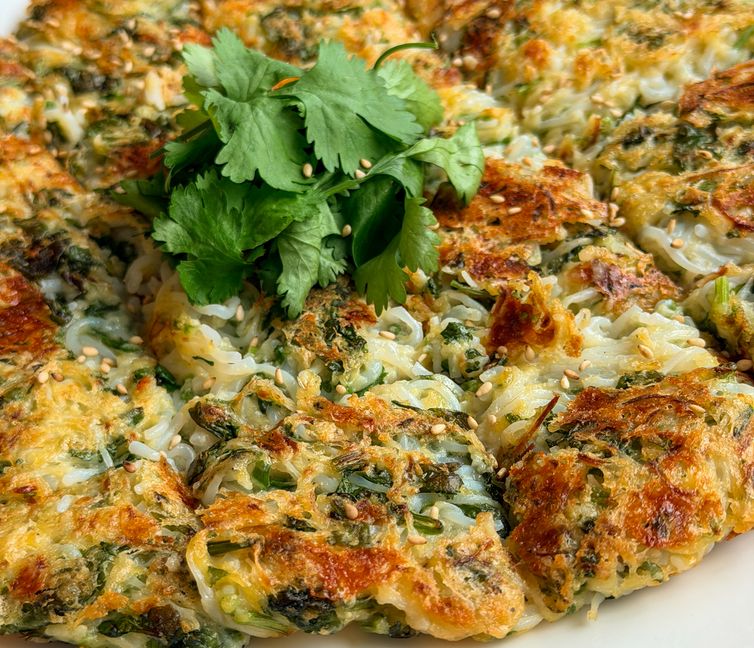
Konnyaku noodles, also known as shirataki, are a staple in my fridge because they are so easy to cook with and FULL of fiber. Despite how they look, they are actually made entirely from the konjac yam (also known as devil’s tongue lol), and they are an important ingredient in many traditional Japanese dishes!
Konnyaku come in all kinds of shapes like a grey block, balls, twists, on skewers, and even in rice form. For this recipe, we’re using the noodle version – shirataki.
In Japan, you can find both grey and white shirataki at pretty much any supermarket, and they’re SO cheap!
In recent years, konnyaku has become a popular diet food because it is almost zero calories but packed with fiber. If you are not used to eating it, you might feel a bit of digestive discomfort if you eat too much, so I recommend starting with small amounts.
When I first made this recipe, I used konnyaku “rice” but it is quite hard to find outside of Japan which is why we are using shirataki noodles cut into tiny pieces. To be honest, I think I might prefer this shirataki noodle version!
This recipe comes together in about 20 minutes and is perfect for lunch or dinner when you want to use up any greens in your fridge. I used cilantro because I, thankfully, did not get the gene that makes it taste like soap, but if you’re not a fan, you can swap it for nira (Chinese chives), scallions, another herb, or even spinach.
It’s such an easy, feel-good dish, so I hope you give it a try!
Sponsored by the National Konnyaku Organization in Japan
20 minutes

Lina ☆ りな
PROFILE
INGREDIENTS
SERVES 2
Original recipe (1X) yields 2 servings
When scaling the recipe, the ratios of some ingredients may require slight adjustments. Adjust as necessary and season to taste.
- 10 2/3 oz shirataki konnyaku noodles
- 1 tsp sugar (to get rid of the konnyaku smell)
- 1 bundle cilantro (or any green you prefer)
- A5 1/3 oz silken tofu
- A1 egg
- A1tsp sesame oil
- A2 1/2 oz shredded cheese
- A4 tbsp potato starch
- A1 tsp chicken stock powder
- ASalt and pepper
DIRECTIONS
- 1
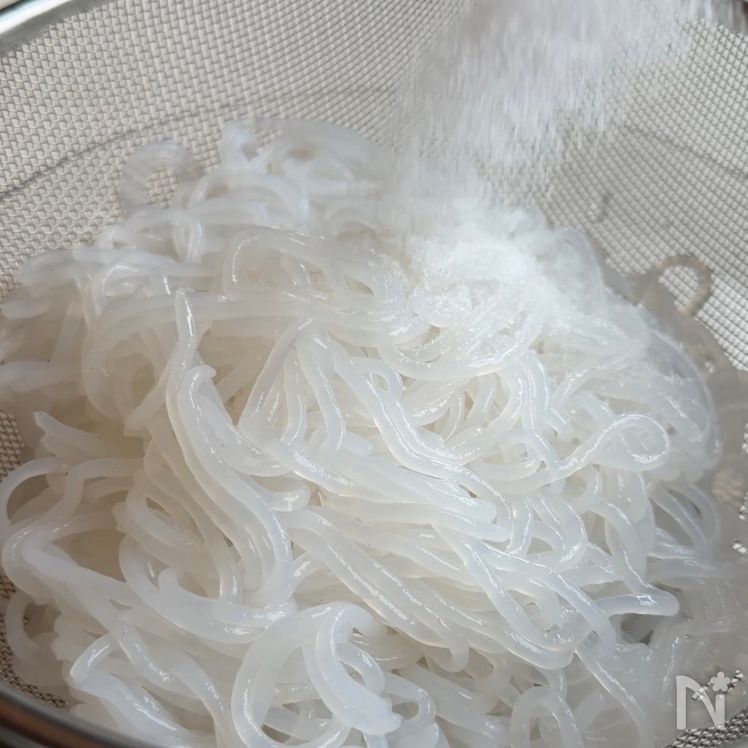
Massage the shirataki konnyaku noodles with sugar for 1–2 minutes, then let them sit for about 5 minutes while you bring a pot of water to a boil (this helps remove the unique konnyaku smell!). Finely chop the cilantro using scissors, reserving a little for garnish.
- 2
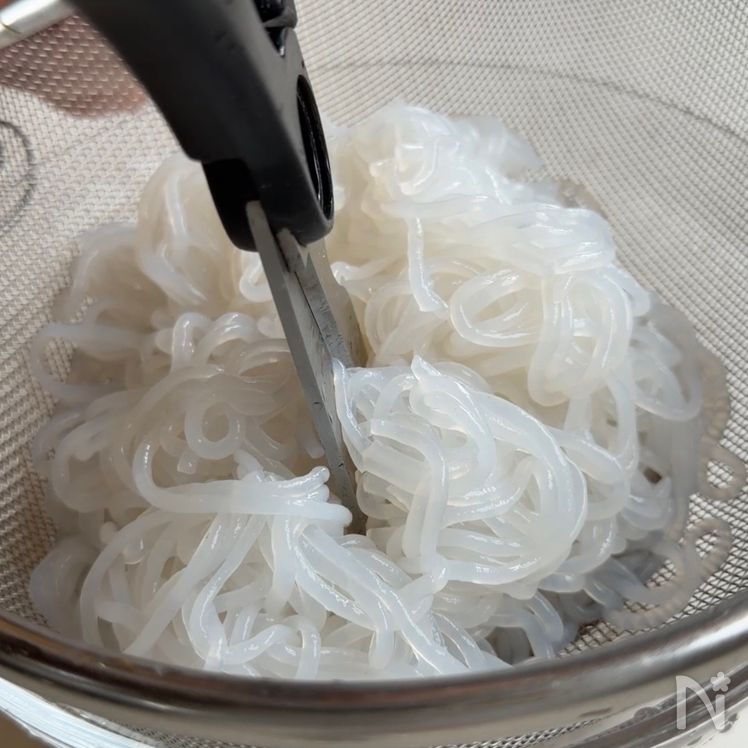
Rinse and drain the shirataki, then cut them into small pieces using scissors.
- 3
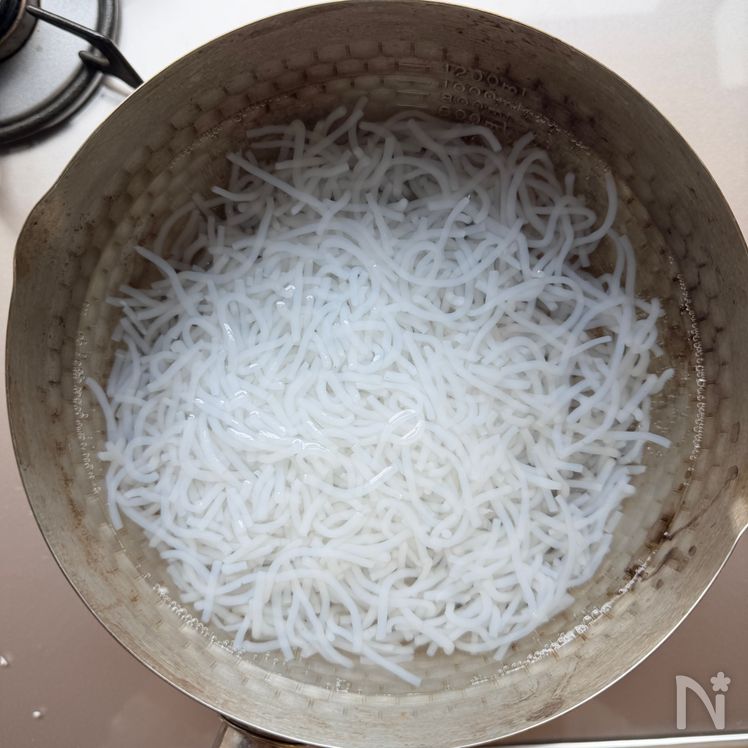
Add the cut shirataki to the boiling water and cook for 3–5 minutes, or until the water returns to a boil. Drain and quickly rinse under cold water to cool. Set aside and let any excess water drain while you prep the other ingredients.
- 4
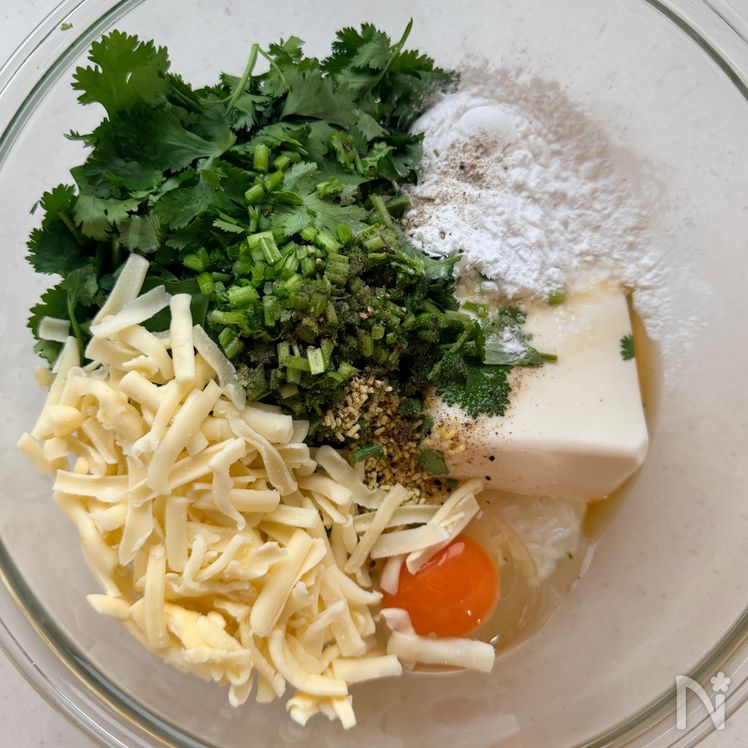
In a large bowl, combine all (A) ingredients, the chopped cilantro and the drained shirataki together. Mix thoroughly, making sure there are no clumps of potato starch.
- 5
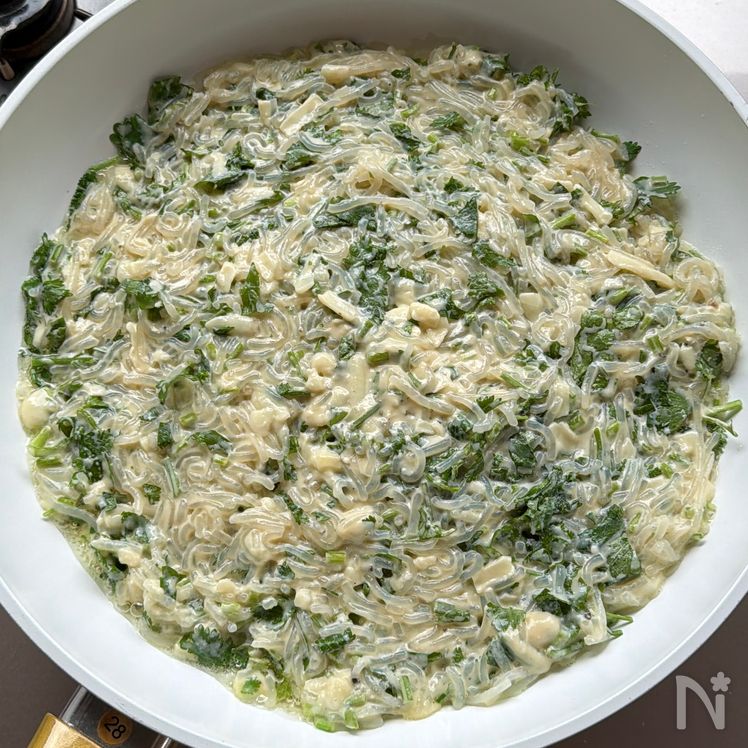
Heat a lightly oiled pan over medium heat, then pour in the batter and spread it out evenly. Cook until the bottom is golden and crispy (about 4–5 minutes), then flip.
- 6
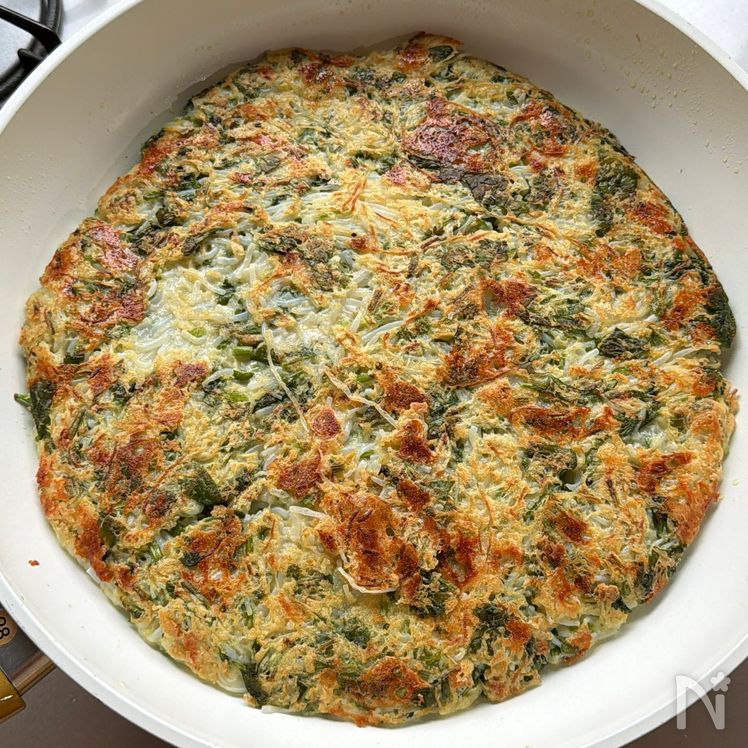
Cook the other side until crispy as well, then remove from the pan.
- 7
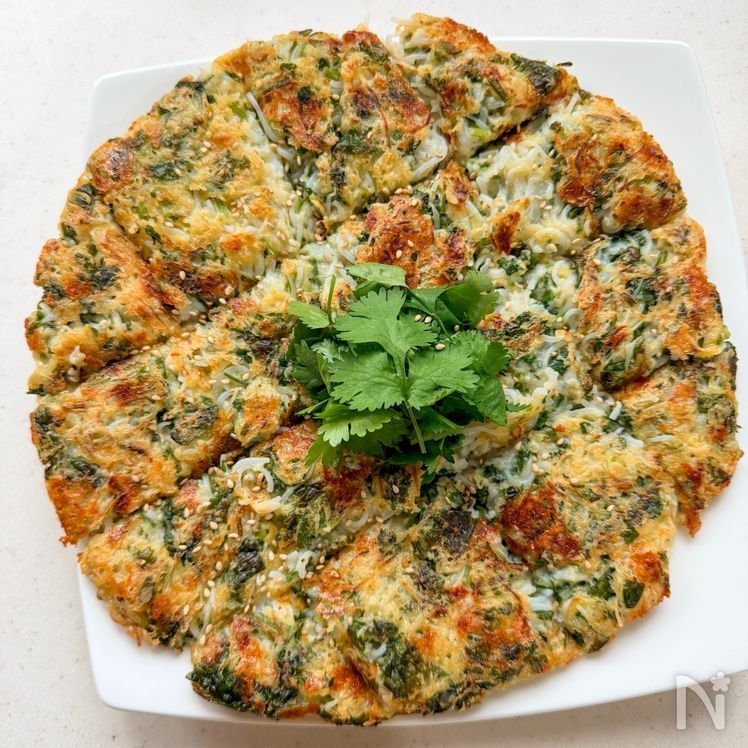
Cut into squares and serve! You can top it with sesame seeds and the coriander leaves you set aside for garnish. Enjoy with your choice of soy sauce, ponzu, miso mayo, sriracha, or any sauce you like.
RecipeID
976
Tips & Notes
🌟As with most konnyaku products, shirataki can have a slightly fishy smell when you first open the package, but it's actually not fish. The smell comes from a compound in the konjac plant called trimethylamine and the calcium hydroxide solution used to preserve it.
Thankfully, that smell is very easy to remove! Here are a few methods:
・Massage with sugar or salt for a few minutes, then let it sit for at least 5 to 10 minutes before rinsing
・Boil in salted water until it comes to a boil
・Microwave on high for 2 minutes (if using a block, cut or tear it into smaller pieces first)
If the smell is strong, you can also massage it with a splash of vinegar or lemon juice. I've found that massaging with sugar and then boiling works best, but feel free to try different methods and see what you prefer!
🌟Cilantro can be replaced with any green you prefer like scallions, green onions, spinach!
🌟I used a 10.2-inch (26 cm) frying pan.
MY RATING
Sign up or log in for free to submit your reviews!
GET STARTEDREVIEWS
Be the first to review!
Hi friend! こんにちは! I’m Lina Takahashi, a Japanese-American gal born and raised in Colorado and my love language is making people food! To be honest, my last name was actually a part of my identity that I actually really struggled with as a kid. I grew up as one of very few Asian women in my community in Boulder, Colorado and I used to be incredibly self-conscious of my last name because it sounded “too” Japanese and it was often mispronounced. I wanted a simple last name, a name anyone could recognize and know that I am the same as everyone else — oh, how heartbreaking it must have been for my mother the day I came home and asked her why I don’t have blonde hair and blue eyes. Even throughout questioning my identity as a Japanese-American woman, one thing that I never questioned was knowing for a fact that Japanese food was my absolute favorite. All I wanted to do as a kid was watch my mom cook in the kitchen and learn how she creates this magical food. Who knew I would come to create a platform to share it with you, too! I am thankful for my mother who taught me how to cook Japanese food in a city where it was hard to find Japanese ingredients nearby. She made us miso soup every night, Japanese food like omurice, Japanese croquettes, curry, karaage, sushi and so much more! I know now that it was not an easy feat. She made her own somen and udon broth, she baked her own Japanese shokupan; she was making mochi before Instagram or Tik Tok existed! Ponzu and salmon on rice?! That was my breakfast I looked forward to it in elementary school the day after we had salmon for dinner. Now, all I want to do is share with YOU what I’ve grown up eating and cooking with my Japanese home in hopes that you can bring a little bit of Japan into your kitchen! Many of my recipes have a Japanese twist on them, but a lot of my recipes are also just because I think it tastes good and I hope you do too 🙂 Come say hi and send me any recipe requests on social platforms under @takahasheats and join me in a life of eating, cooking and being in awe of food. Itadakimas! Instagram: https://www.instagram.com/takahasheats YouTube: https://www.youtube.com/@takahasheats TikTok: https://www.tiktok.com/@takahasheats