
About Onigiri
Onigiri, Japanese rice balls, originated in the Heian Period (794-1185AD) and have continued to remain a staple of lunchboxes and on-the-go food through present day –- a pillar of Japanese food culture.
Originally made from leftover rice and shaped for convenience, onigiri evolved over time from a simple homemade snack into a familiar sight in convenience stores and supermarkets across Japan.
In fact, onigiri shops have been popping up in recent years, further cementing their status as a symbol of Japanese food culture.
The idea of shaping rice into a portable form dates back over 1,000 years.
In the Heian period (794–1185), rice portions called tonjiki were served to workers at noble households after banquets.
These were large, oval-shaped servings made with sticky, glutinous rice.
By the late Kamakura period, regular white rice (uruchimai) became the standard.
During Japan’s Warring States era (15th–16th century), onigiri served as a practical food for soldiers in the field.
By the Edo period (1603–1868), they were a common part of bento meals—ideal for travelers, farmers, and workers on the go.
In the Genroku era (late 1600s), the cultivation of Asakusa nori (a type of edible seaweed) began, paving the way for the seaweed-wrapped onigiri that many know today.
A major turning point came in 1974 when Japan’s first 7-Eleven opened and introduced a new type of packaging that kept the seaweed separate until just before eating.
This kept the nori crisp and helped make convenience store onigiri a national favorite.
Today, it remains a go-to snack or quick meal, and a beloved part of daily life in Japan.
Whether homemade or store-bought, onigiri offers a comforting bite of Japanese tradition—with a wide variety of fillings to explore.

Yoshiro Takahashi
PROFILE
INGREDIENTS
SERVES 2
Original recipe (1X) yields 2 servings
When scaling the recipe, the ratios of some ingredients may require slight adjustments. Adjust as necessary and season to taste.
- A1 1/3 cup uncooked Japanese short-grain rice
- A2 cup cold water
- Aextra cold water for washing the rice
- B2 cup freshly-steamed Japanese short-grain rice
- B1/2 tsp. salt
- BBowl of cold water for wetting your hands
DIRECTIONS
- 1
Cooking the Rice(Directions for steaming in a pot)
【Ingredients(2〜3 servings)】 A
Wash the rice and let soak for 30 minutes. After 30 minutes, fully drain the water from the rice.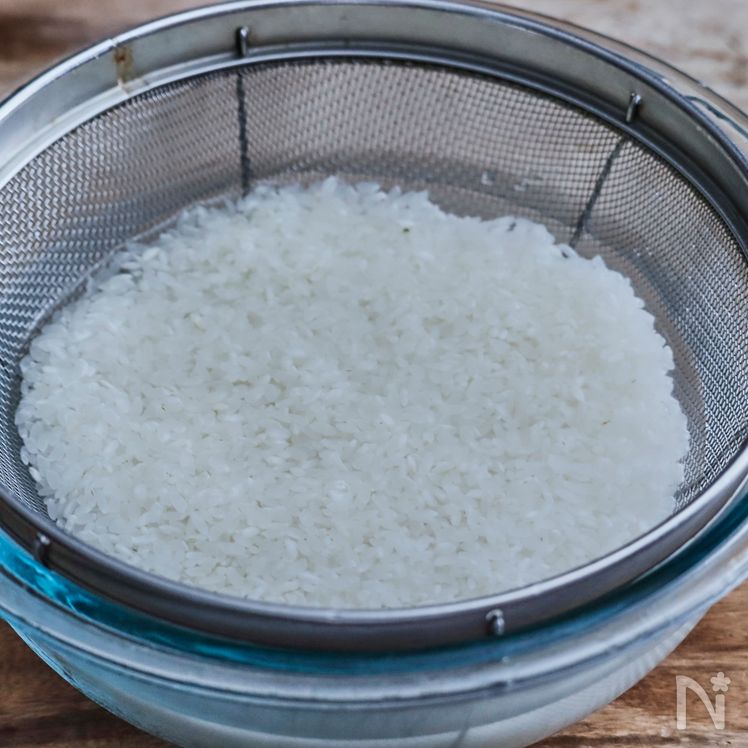
- 2
Place the rinsed rice and scant 2 cups of fresh cold water in a pot. Turn on the heat to medium-high and bring to a boil. Do not cover the pot!
Once it begins boiling, reduce the heat to medium and let it boil for 2 minutes. If the pot begins to boil over, reduce the heat slightly.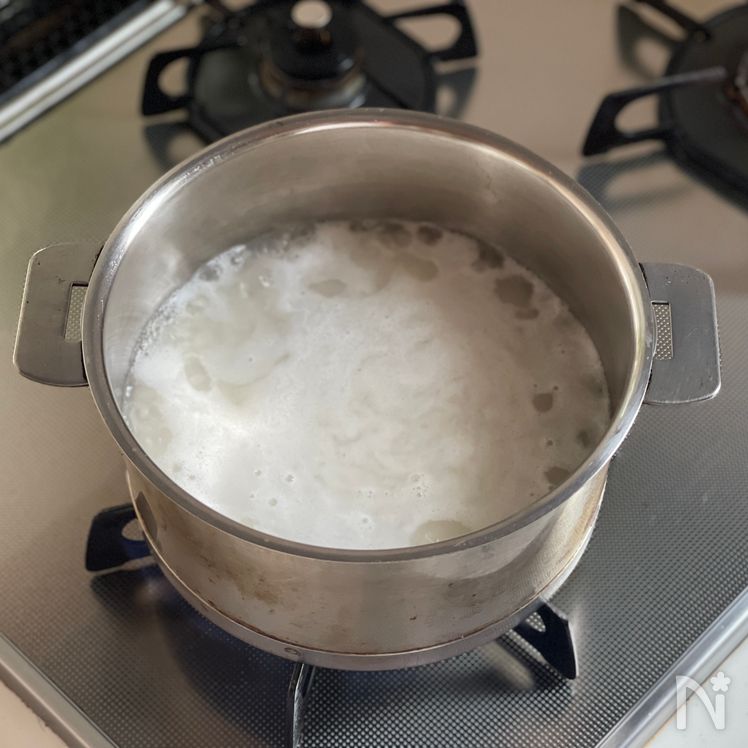
- 3
Cover the pot with a lid and reduce to low heat. Let simmer for 8 minutes. If the pot begins to boil over, open the lid slightly until the bubbling subsides, then cover the pot again fully and continue to simmer.
After 8 minutes, turn off the heat and let rest for 10 minutes with the lid on. After 10 minutes, remove the lid and gently stir.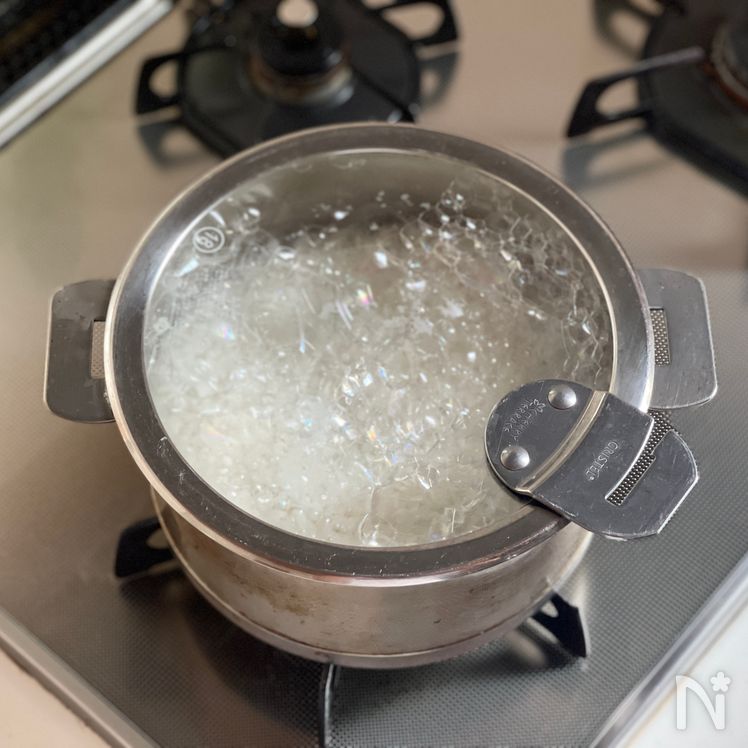
- 4
Making the Rice Balls
【Ingredients(1 serving = 2 rice balls)】B
Let the freshly-steamed rice cool at room temperature until you can comfortably touch it with your hands.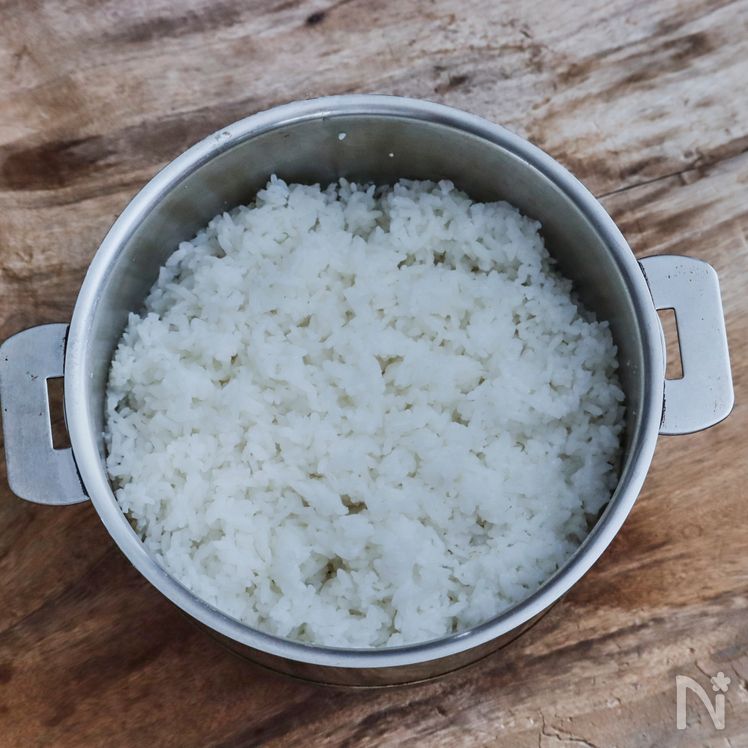
- 5
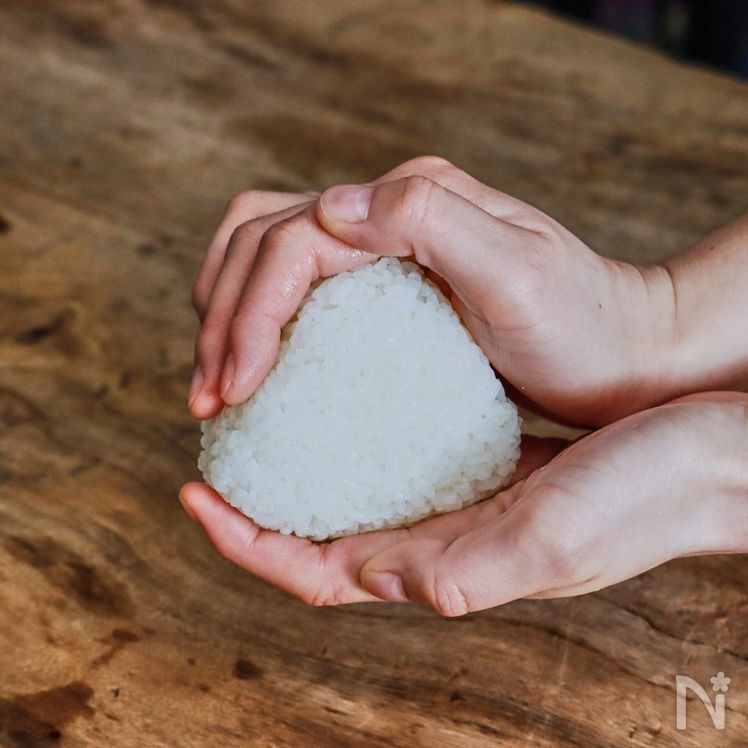
Dampen your hands with cold water and rub half of the salt into your palms. Scoop half of the rice into one hand and with both hands cupped, gently shape it into a triangle. Repeat with the remaining rice. Plate and serve.
RecipeID
11
Tips & Notes
・When forming the rice balls, be sure to spread the salt lightly and evenly over the entire hand.
Aim to just barely glaze the surface of the rice ball with approx. 1/4 tsp. of salt.
Using too much salt will result in a very strong salty flavor, so it is best to begin with a small amount of salt and add more to taste.
・Rice that has been cooled too much will not stick together into balls, so be sure to use freshly-steamed rice.
If the rice is too hot, transfer it to a bowl and wait to form the rice balls until you can comfortably touch it with your hands.
・Long-grained rice is not as sticky as Japanese short-grain rice and is not suited for making rice balls. Be sure to use Japanese short-grain rice.
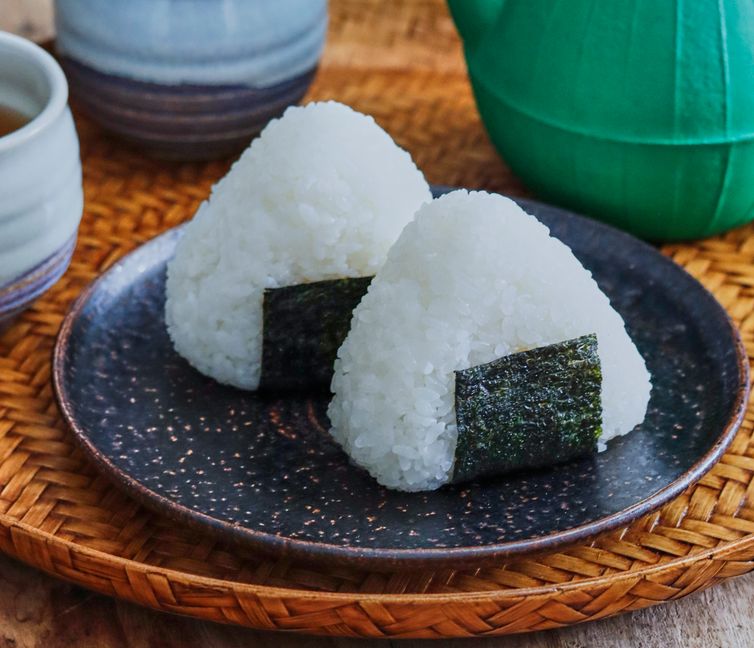
・To wrap the rice balls in dried seaweed as is shown in the photo below, cut the seaweed sheets into 6 in. x 2 in. rectangles.
MY RATING
Sign up or log in for free to submit your reviews!
GET STARTEDREVIEWS
Be the first to review!
Born in 1988 in Kawasaki, Kanagawa Prefecture, I was inspired by my father, a traditional Japanese chef, and learned cooking fundamentals early at my family’s restaurant. After graduating from Senshu University’s Faculty of Law, I worked in sales at Nippon Shokken Co., Ltd., then as a restaurant manager, before completing a professional food coordinator program and starting my career as an independent culinary expert. I hold nine food-related qualifications, including Professional Chef’s License, Sake Sommelier (Kikisake-shi), Certified Sommelier (ANSA), and Vegetable Sommelier, and was the youngest to earn the advanced title of Certified Lecturer in Sake Studies. While rooted in Japanese cuisine that highlights natural flavors, my repertoire spans ethnic, Italian, and organic dishes. In 2015, I joined a project by Japan’s Ministry of Agriculture, Forestry and Fisheries and JICA, promoting Japanese cuisine domestically and in countries such as France, Paraguay, Bangladesh, and Serbia. A passionate triathlete, I have achieved top finishes in domestic competitions, won my age group at the 2018 Tomonoura Triathlon, and represented Japan at the Age Group World Championships in Australia (2018) and Switzerland (2019). Known as “the running chef,” I collaborate with sports brands and health media, advocating the integration of food, health, and sports. Since 2020, I have served as Official Athlete Food Coach for the Japan Para Table Tennis National Team, supporting athletes’ nutrition. In 2022, I became a father and now balance parenthood with my culinary and athletic careers.