
Harusame (春雨, literally “spring rain”) refers to Japanese noodles made from starches such as mung beans, potatoes, sweet potatoes, or corn. In English, they are often called glass noodles or cellophane noodles. The name was inspired by their delicate, transparent appearance, resembling spring rain.
In China, they are known as fentiao or fensi, and one of the most famous variety is Longkou Harusame from Shandong Province. In Japan, the main production area is Nara Prefecture, where local factories account for about 60% of the national supply.Japanese-made harusame differ from the Chinese version with a firmer texture that stands up well in soups and hot pots, thanks to a unique freezing process used in production.
Harusame was introduced to Japan during the Kamakura period (12th–14th century), and was originally used in Zen Buddhist vegetarian cuisine. Over time, it filtered into home kitchens and became a staple in salads, soups, and hot pots. Its light, refreshing texture balances heavier dishes, making it a beloved and versatile ingredient in Japanese kitchens.
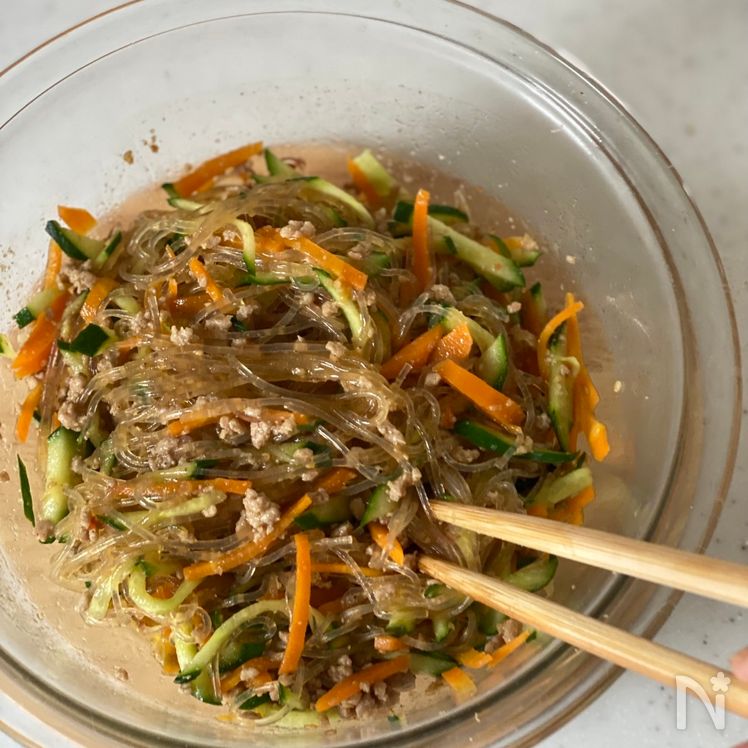
In this recipe, glass noodles are microwaved together with a tangy broth so they absorb plenty of umami, creating a flavorful salad.Combined with seasoned ground pork and fresh vegetables, it’s a refreshing yet satisfying dish that’s popular with the whole family.
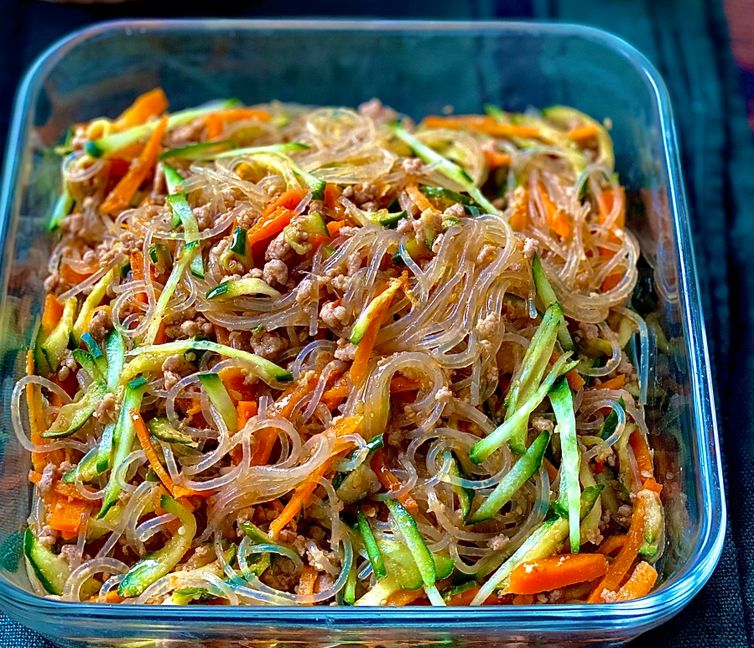
15 minutes

Chiori
PROFILE
INGREDIENTS
SERVES 2
Original recipe (1X) yields 2 servings
When scaling the recipe, the ratios of some ingredients may require slight adjustments. Adjust as necessary and season to taste.
- 1 1/2 oz mung bean glass noodles (harusame)
- 1/3 carrot, julienned
- 1 cucumber, julienned
- 3 1/2 oz ground pork
- 2 tbsp. ground sesame seeds
- 1 tbsp. sesame oil
- A3/4 cup water
- A1 1/2 tbsp. vinegar
- A1 tbsp. sugar
- A1 tbsp. soy sauce
- A1 tsp. chicken bouillon powder
- B1/2 tbsp. sugar
- B1/2 tbsp. soy sauce
- B1/2 tsp. grated ginger
- B1/2 tsp. grated garlic (from a tube)
- B1/2 tsp. doubanjiang (chili bean paste, optional)
- B1/2 tsp. sesame oil
DIRECTIONS
- 1
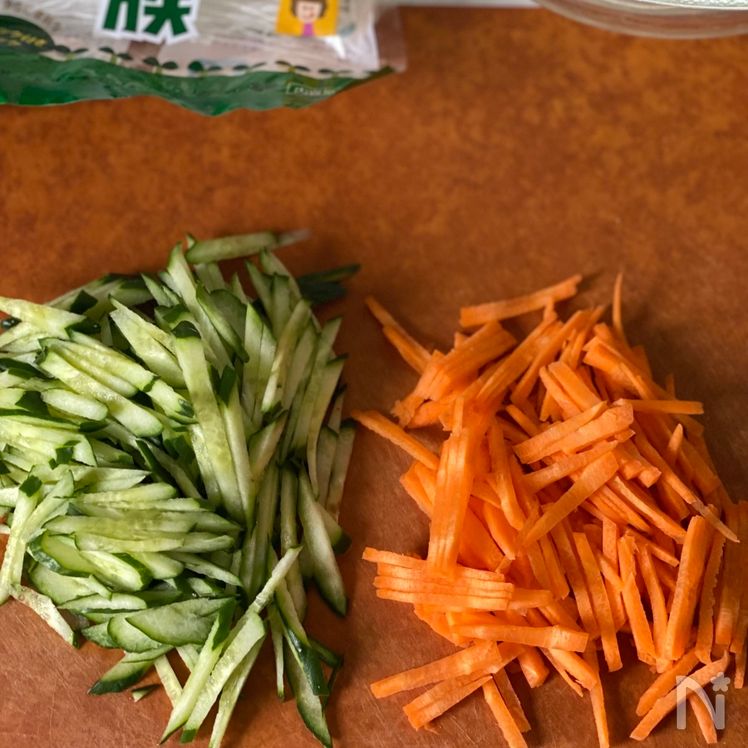
Julienne the carrot and cucumber.
- 2
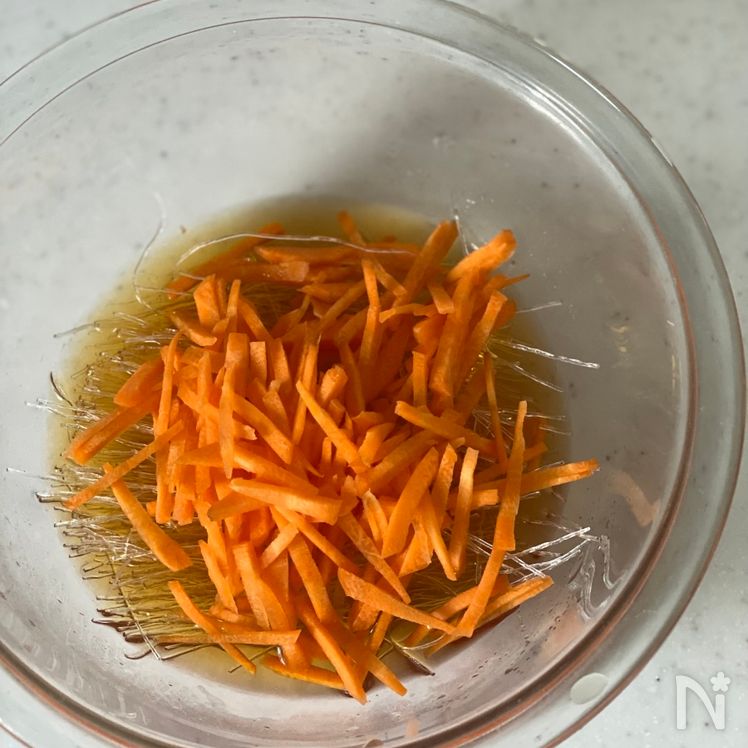
In a large microwave-safe bowl, combine A ingredients (water, vinegar, sugar, soy sauce, and chicken bouillon). Add the glass noodles (cut in half if very long) and make sure they are submerged in the liquid. Place the carrot on top, cover loosely with plastic wrap, and microwave at 600W for 5 minutes.
- 3
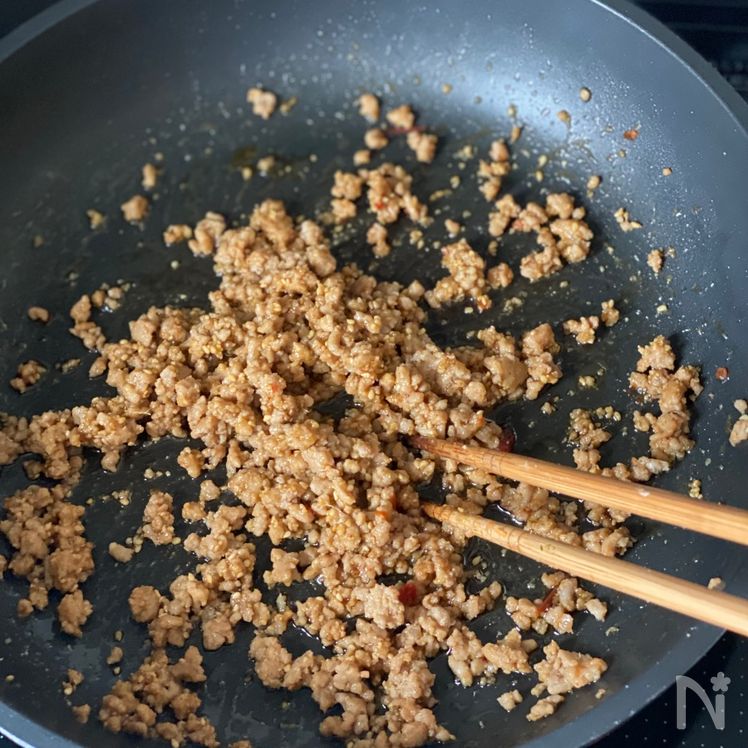
Meanwhile, in a skillet, combine ground pork with B ingredients (sugar, soy sauce, ginger, garlic, doubanjiang, and ½ tsp. sesame oil). Cook over medium heat until the pork is fully cooked, then stir in the ground sesame seeds.
- 4
Remove the bowl from the microwave and stir the noodles well. Once slightly cooled, add the cooked pork mixture, cucumber, and additional 1-2 tbsp. sesame oil. Toss to combine.
RecipeID
412
Tips & Notes
・Doubanjiang can be omitted for a milder taste; substitute with miso if preferred.
・Fresh ginger can be replaced with ginger paste.
・Can be stored for 2–3 days in the refrigerator (counting the day after cooking as day 1).
MY RATING
Sign up or log in for free to submit your reviews!
GET STARTEDREVIEWS
Be the first to review!
I live in Sapporo, Hokkaido, and I’m a mother of two daughters who both love to eat. As a working mom, my realistic, everyday recipes have resonated with many, and as of May 2024, I’m grateful to have over 380,000 followers on Instagram. Thank you so much for your support! From a homemaker’s perspective, my motto is to create recipes that make families happy and help busy women. I share dishes that can be made even more delicious with just a small twist using seasonings you already have at home. Along with recipes, I also post daily tips on cooking techniques to enhance flavor and handy food storage methods that make life in the kitchen easier.