
“That perfect crunch, the tender bite—pure joy in every mouthful.”
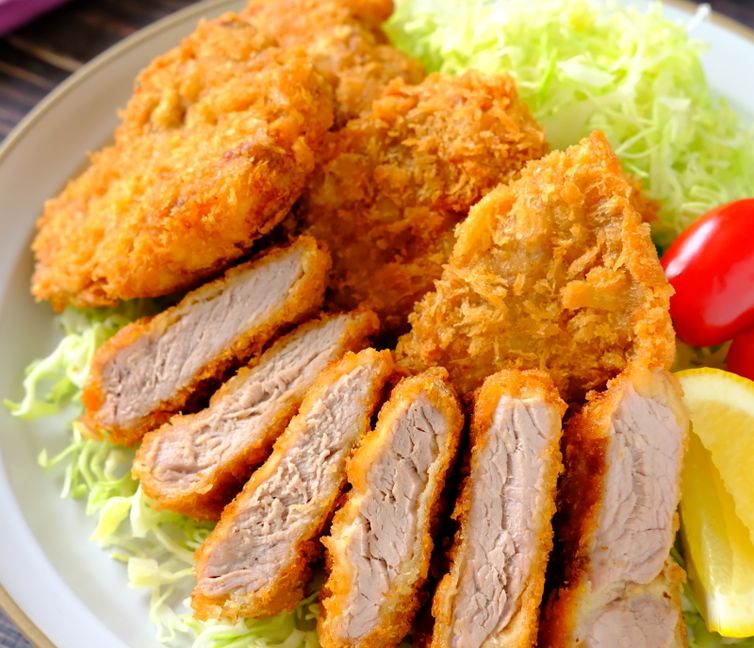
This Hirekatsu (Japanese pork tenderloin cutlet) recipe delivers exactly that: a crisp, light coating that clings beautifully to the meat with a juicy interior so tender it almost melts. You’ll hear the satisfying “crunch” when you cut into it and feel the “crisp snap” with every bite—a hallmark of truly well-made tonkatsu.
While it may not rival a Michelin-starred tonkatsu restaurant, this home-style version earns full marks for its balance of technique, simplicity, and flavor.
The secret lies in tenderizing the meat thoroughly, sealing in moisture with mayonnaise, and mastering a two-stage frying method for perfect crispness.
15 minutes

Oneko
PROFILE
INGREDIENTS
SERVES 3
Original recipe (1X) yields 3 servings
When scaling the recipe, the ratios of some ingredients may require slight adjustments. Adjust as necessary and season to taste.
- 1 pork tenderloin (whole)
- 1.5tsp seasoned salt and pepper (Lawry's or similar)
- 1tbsp Japanese mayonnaise
- 1.5cups panko breadcrumbs (adjust for coating)
- vegetable oil (for deep frying)
- A1 egg
- A1tbsp sake
- A1tbsp water
- A4tbsp all-purpose flour
DIRECTIONS
- 1
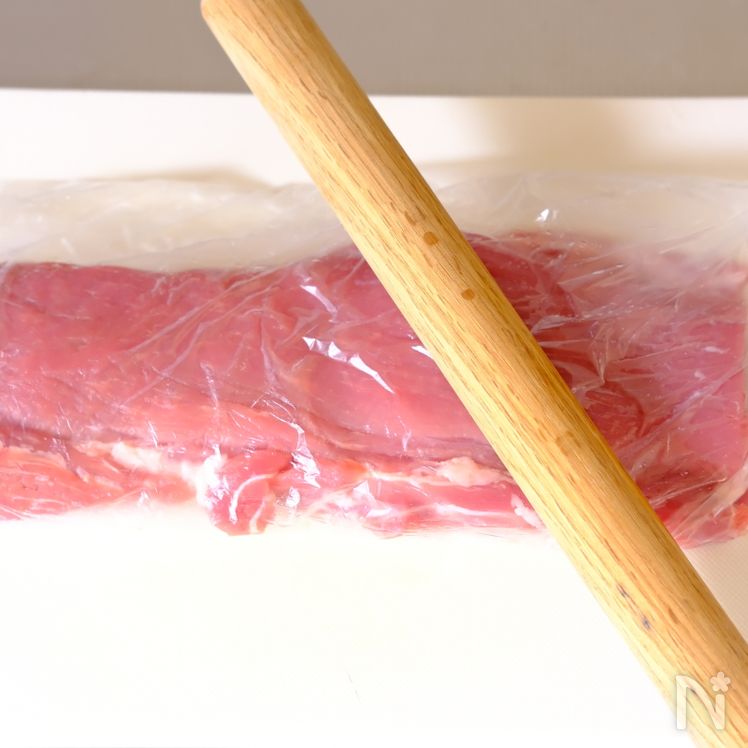
Prepare the meat: Pound the pork tenderloin well with a rolling pin or meat mallet, then slice into ¾-inch-thick pieces (1.5–2 cm).
- 2
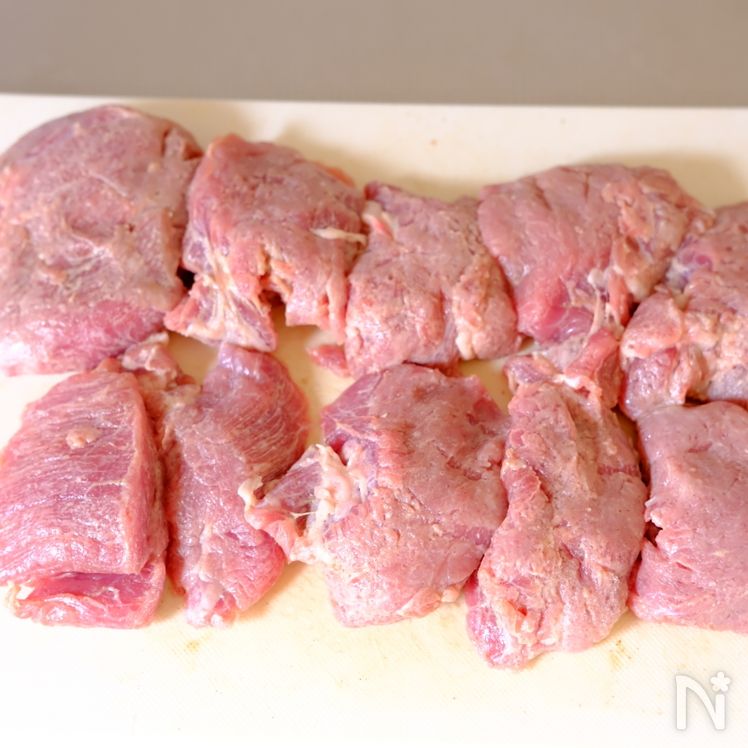
Season: Sprinkle with seasoned salt and pepper, then rub in mayonnaise to help keep the meat moist and tender.
- 3
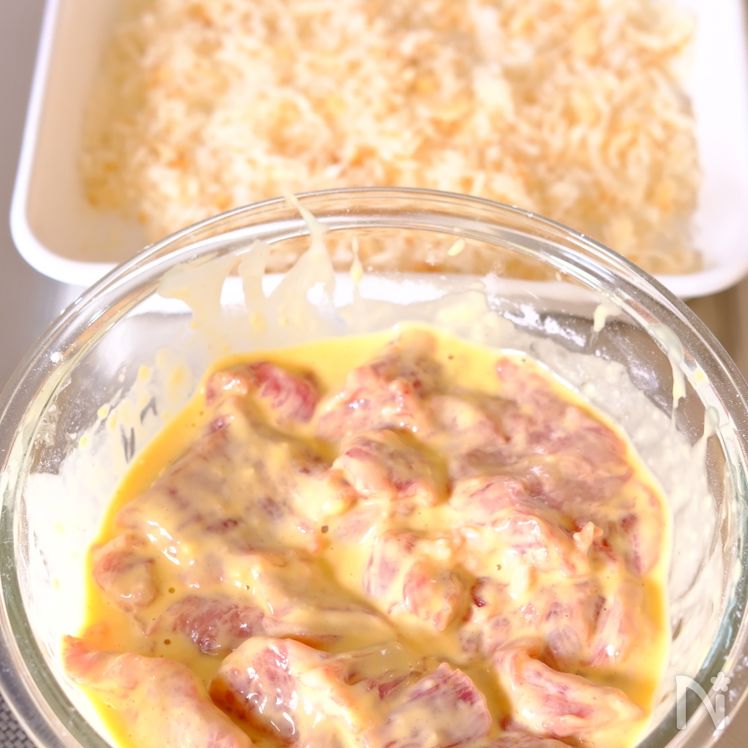
Coat: Spread half the panko breadcrumbs on a tray. In a bowl, mix A (egg, sake, water, and flour) to make a batter and dredge each tenderloin in the batter. Place on the tray with panko and sprinkle the remaining breadcrumbs over the top. Use dry hands to gently press the crumbs onto all sides.
- 4
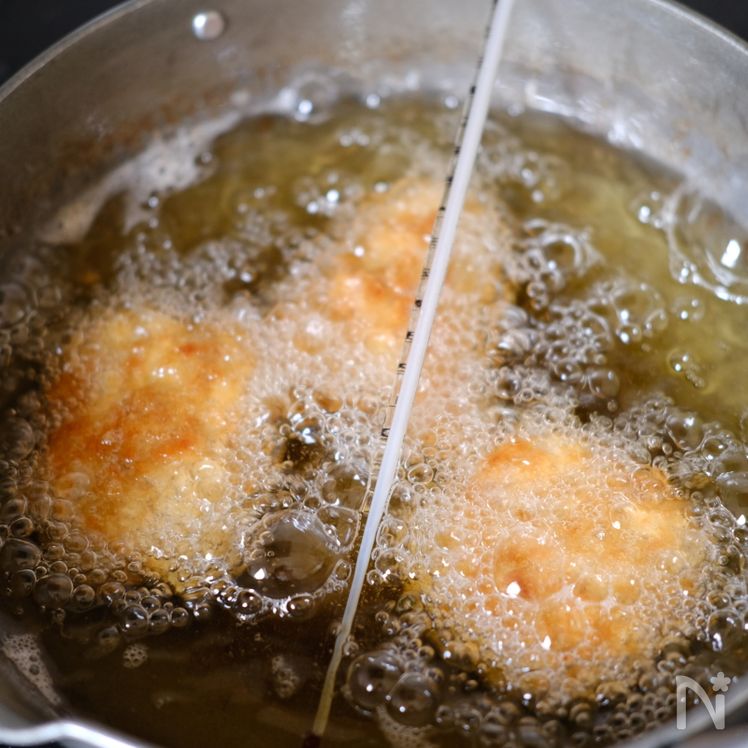
First fry: Heat oil to 300–320°F (150–160°C). Fry for about 3½ minutes, until the cutlet turns pale golden brown and floats slightly. Remove and let rest for 3 minutes.
- 5
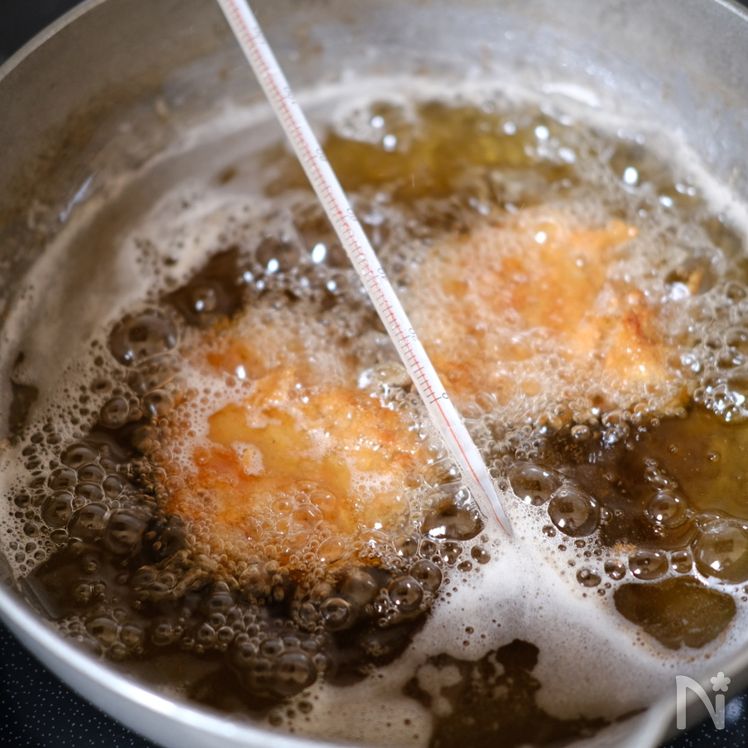
Second fry: Increase oil temperature to 355°F (180°C) and fry again for about 30 seconds, until deep golden and crisp. Bubbles will become finer and the frying sound will be higher-pitched when the pork is done.
- 6
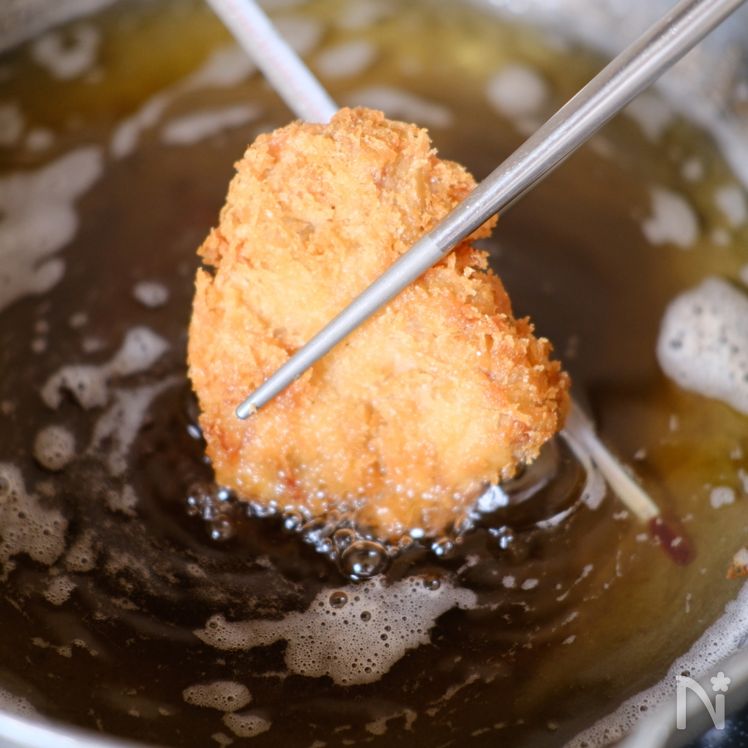
Lift the cutlet so just the edge touches the oil surface for a few seconds—this helps oil drain cleanly due to surface tension.
- 7
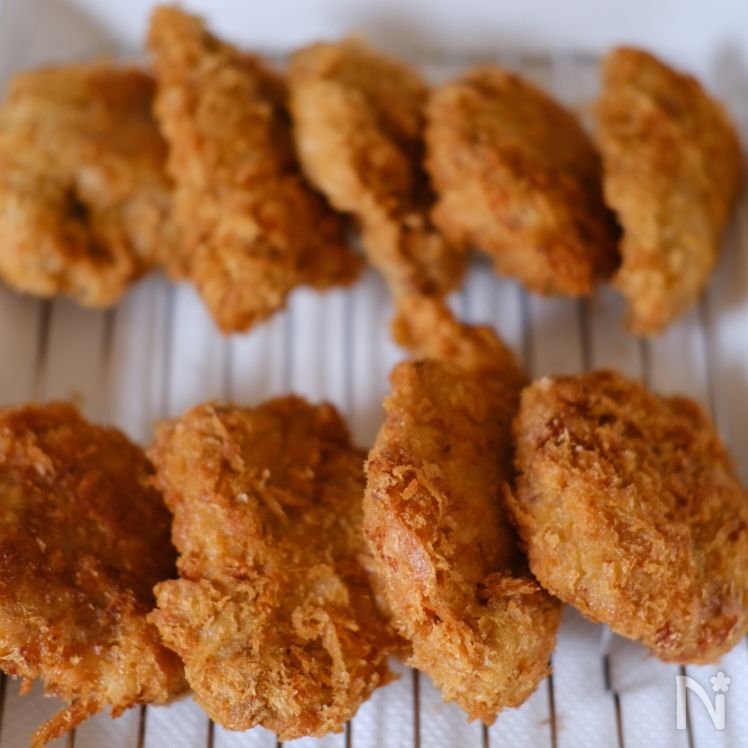
Drain: For best results, let the cutlet stand vertically on a rack to drain excess oil.
- 8
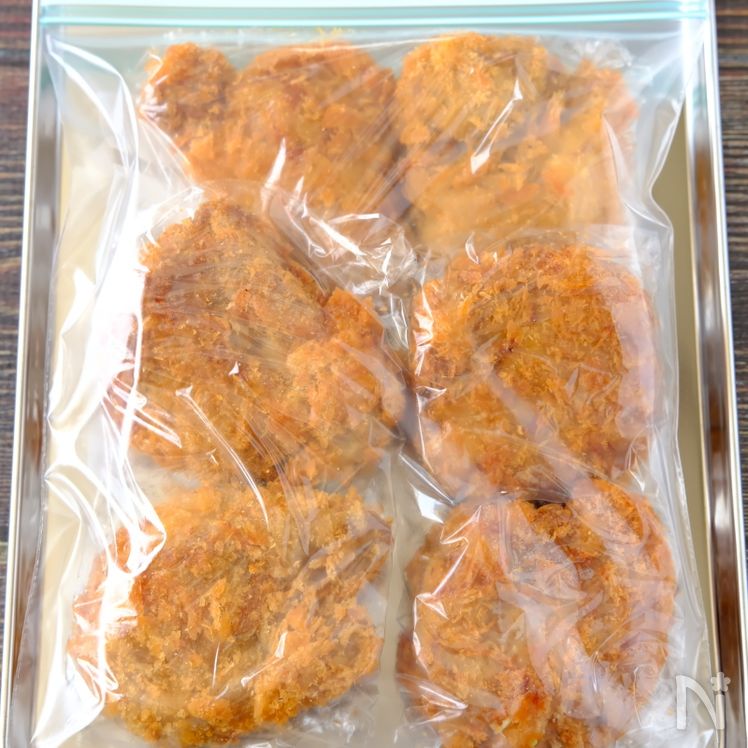
Freezing option: If storing, wrap in paper towels and plastic wrap, place in a freezer bag, and freeze for up to 2 weeks. Reheat in a toaster oven or grill before serving.
RecipeID
732
Tips & Notes
・Cutting the meat:
For smaller pieces, slice straight across.
For larger, thinner pieces, slice diagonally at a 45° angle.
・Choosing panko:
Coarse panko → crunchier, thicker crust (use about 2½ cups).
Fine panko → lighter, thinner coating (about 1½ cups).
・Frying technique:
Ensure that the pan is filled with enough oil so the cutlets can "swim" freely.
Don't over-fry—the meat continues to cook with residual heat.
・Serving ideas:
Serve with lemon wedges, cabbage, and Japanese Worcestershire sauce, or turn leftovers into katsu sandwiches or katsudon (pork cutlet rice bowl).
MY RATING
Sign up or log in for free to submit your reviews!
GET STARTEDREVIEWS
Be the first to review!
"I’m a fun-loving chef and devoted foodie, so captivated by Hokkaido’s incredible variety of ingredients that I decided to make it my permanent home. I’ve been living here for 20 years. In spring, I forage for wild vegetables; in summer, I camp; in autumn, I hunt for mushrooms; and in winter, I ski. I’m an active explorer who chases seasonal flavors and gourmet experiences all across Hokkaido—even if it means spontaneous long-distance trips. My motto is: “If the night is fun, tomorrow will surely be even better!” I focus on creating recipes for flavorful appetizers that liven up the evening and hearty main dishes that make you want to keep reaching for more rice."