
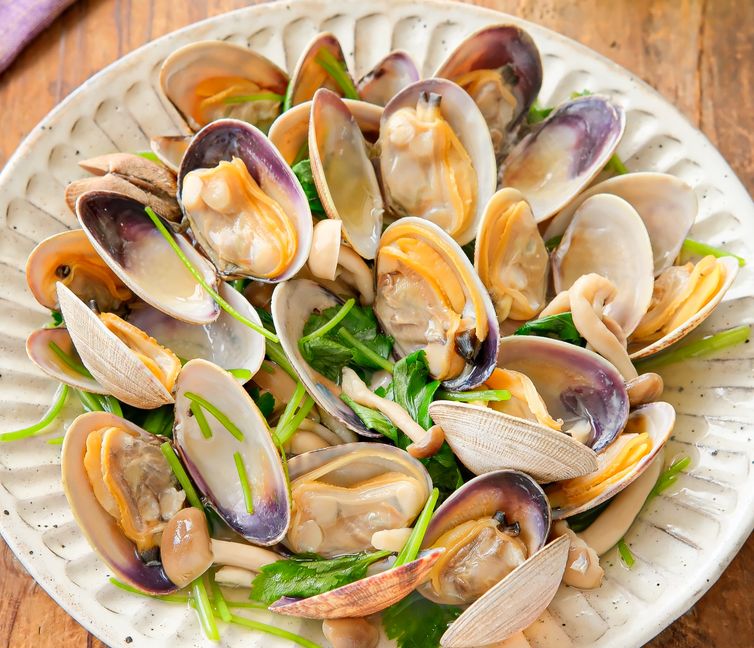
Sake-Steamed Asari Clams (Asari Sakamushi, あさりの酒蒸し) is a Japanese izakaya and home-cooking staple where asari clams (also called Manila clams or Japanese littleneck clams) are steamed with Japanese sake to tender perfection. This dish highlights the creamy, meltingly soft clams and the rich umami that bursts into your mouth with every bite.
In Japan, steamed asari clams are commonly served in spring and autumn when the clams are in season. Due to its short cooking time of just 5 minutes, it is highly popular as an easy appetizer (otsumami) or a side dish for the dinner table.
5 minutes
+ time to soak the clams

Oneko
PROFILE
INGREDIENTS
SERVES 2
Original recipe (1X) yields 2 servings
When scaling the recipe, the ratios of some ingredients may require slight adjustments. Adjust as necessary and season to taste.
- 12oz asari clams
- 2cups water
- 1.5tsp salt
- 4tbsp sake (or white wine)
- 1/3 of a pack of shimeji mushrooms
- 1 bunch of mitsuba (Japanese parsley)
DIRECTIONS
- 1
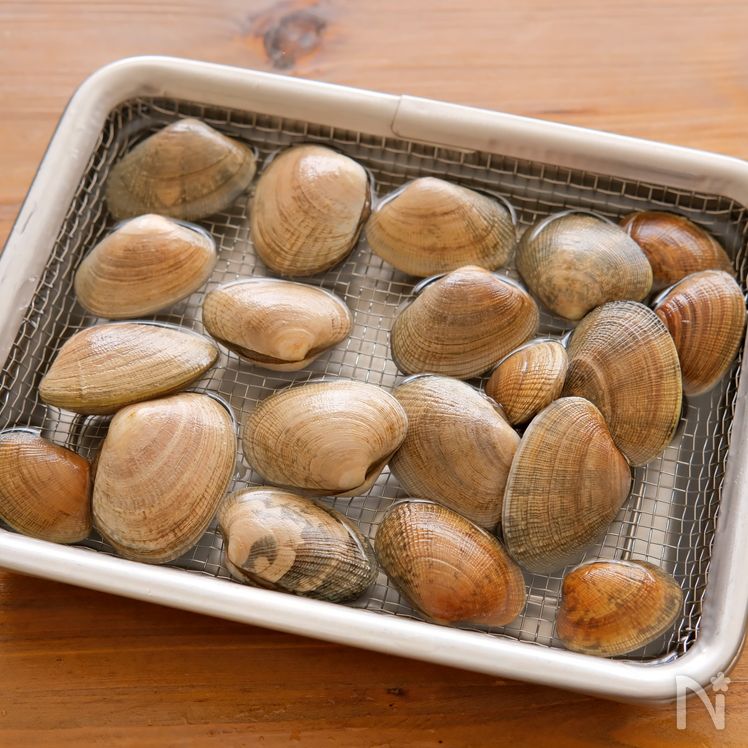
Remove the sand from the clams: Rub the clams together to wash the shells. Place a large colander on a tray (or bowl) and arrange the clams so that they are not overlapping in the bottom of the colander. Completely dissolve the salt in the water, and pour just enough of the saltwater into the tray or bowl to leave the clams slightly exposed. Cover with newspaper or aluminum foil and leave in a quiet, dark place for 30 minutes to 1 hour.
- 2
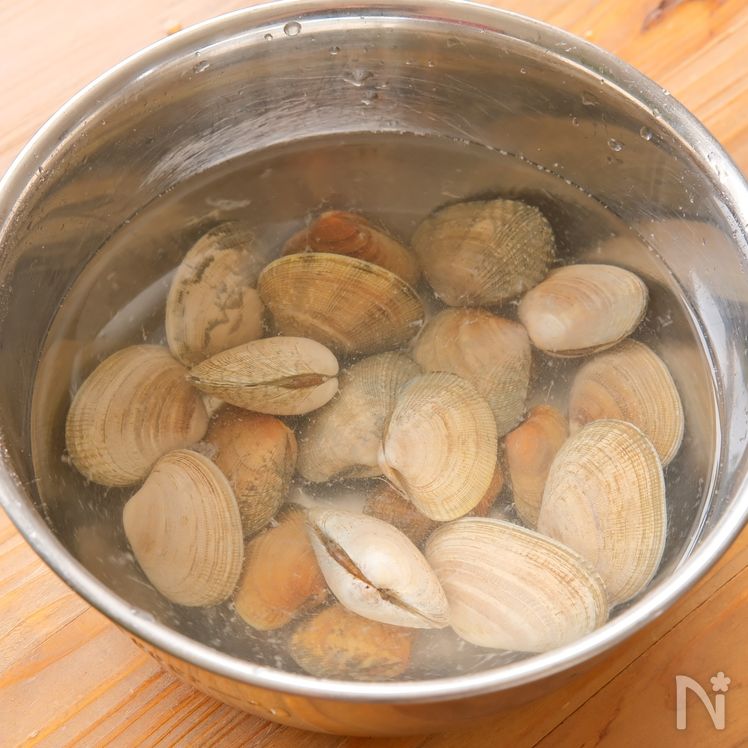
Clean the clams: Transfer the clams to a bowl, pour in plenty of water (not included in the ingredients list), and rub the shells together to wash them. Change the water about three times until the water runs clear.
- 3
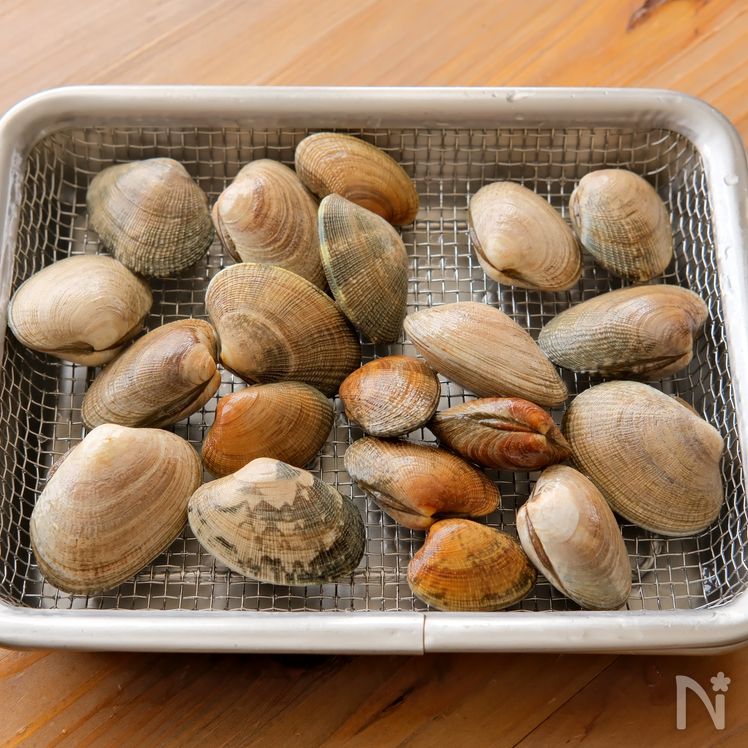
Enhance the clams' umami: Drain the clean water, return the clams to the colander, and let them sit dry, at room temperature for about 30 minutes.
- 4
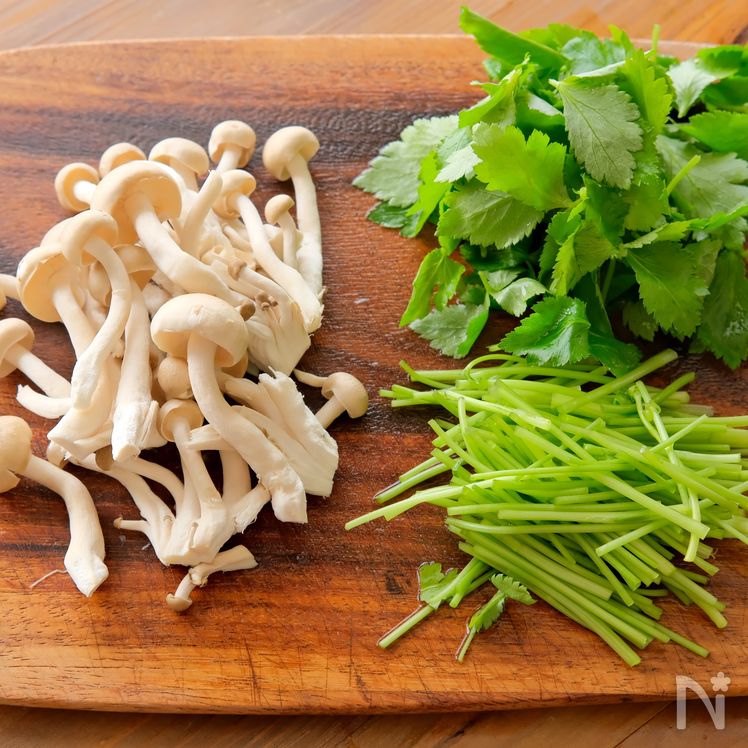
Cut off and discard the tough ends of the shimeji mushrooms and separate the mushrooms into clusters. Tear off the leaves of the mitsuba and cut the stems into approx. 1 ½-inch-long pieces (3–4 cm).
- 5
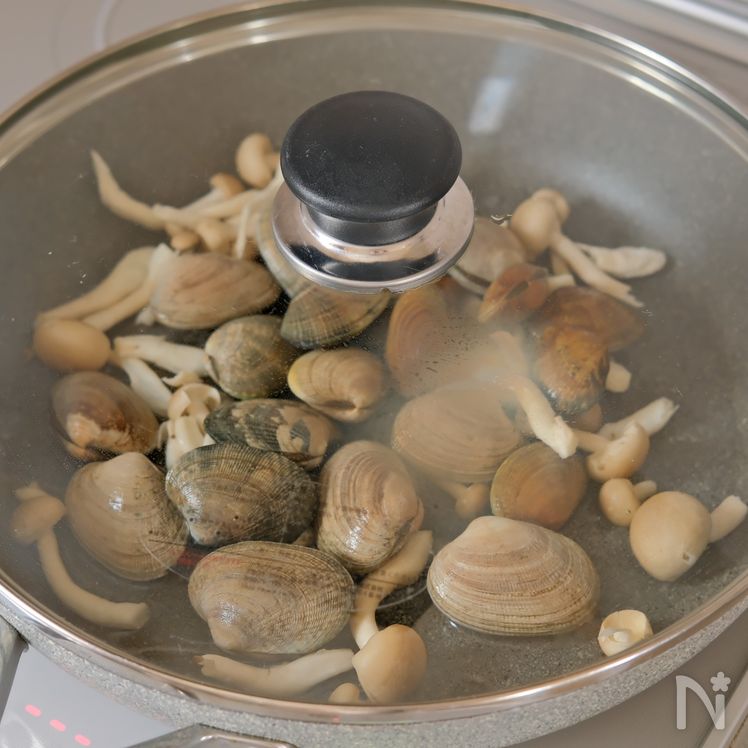
Place the shimeji mushrooms and clams in a frying pan and drizzle with sake. Cover with a lid and turn on to medium-high heat.
- 6
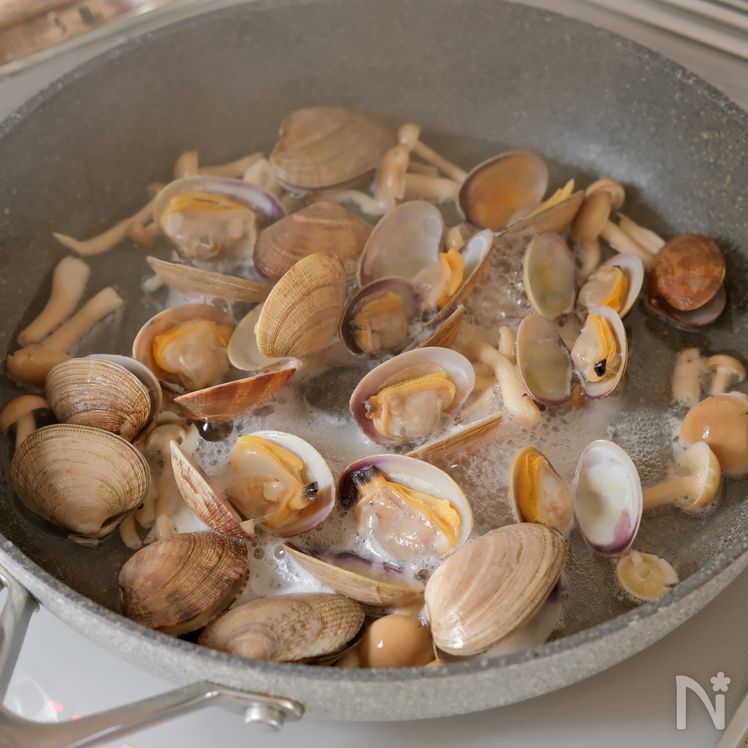
Once you hear the water boiling and the shells starting to open and collide (a "click-clack" sound), open the lid and check on the clams. Remove the lid once the shells are about 80–90% open.
- 7
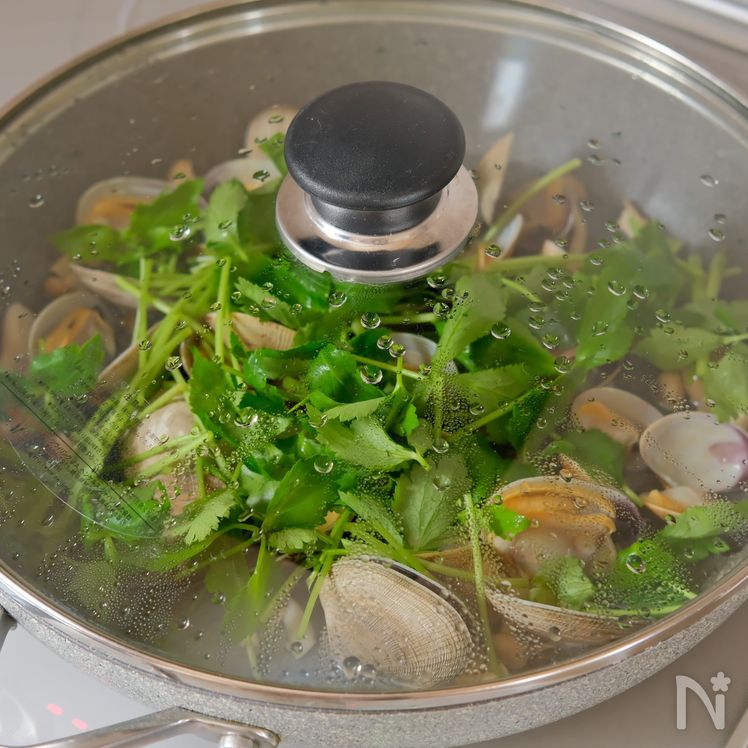
Scatter the mitsuba into the pan, then cover with the lid again. Gently shake the pan and steam for about 30 seconds, then turn off the heat.
RecipeID
724
Tips & Notes
・The clams will lose any fishy odor by releasing the sand trapped inside and thoroughly washing off the dirt from the shells.
・Be sure to keep the salt:water concentration at 3% (5 tsp. of salt per 4 cups of water/30g of salt per 1 liter). Do not exceed this concentration, as the clams may not release the sand effectively.
・The clams will close and stop releasing sand if there are vibrations or noise. Always place them in a dark, quiet place. Also, since it should not be too cold, room temperature is fine except in summer. In summer, place them in the refrigerator's vegetable drawer or another cool but not too cold location.
・Shimeji mushrooms and mitsuba pair well, but you can also make this with only clams, or substitute with long green onion (negi) or mizuna (potherb mustard). The cooking method is the same.
MY RATING
Sign up or log in for free to submit your reviews!
GET STARTEDREVIEWS
Be the first to review!
"I’m a fun-loving chef and devoted foodie, so captivated by Hokkaido’s incredible variety of ingredients that I decided to make it my permanent home. I’ve been living here for 20 years. In spring, I forage for wild vegetables; in summer, I camp; in autumn, I hunt for mushrooms; and in winter, I ski. I’m an active explorer who chases seasonal flavors and gourmet experiences all across Hokkaido—even if it means spontaneous long-distance trips. My motto is: “If the night is fun, tomorrow will surely be even better!” I focus on creating recipes for flavorful appetizers that liven up the evening and hearty main dishes that make you want to keep reaching for more rice."