
About Kakuni
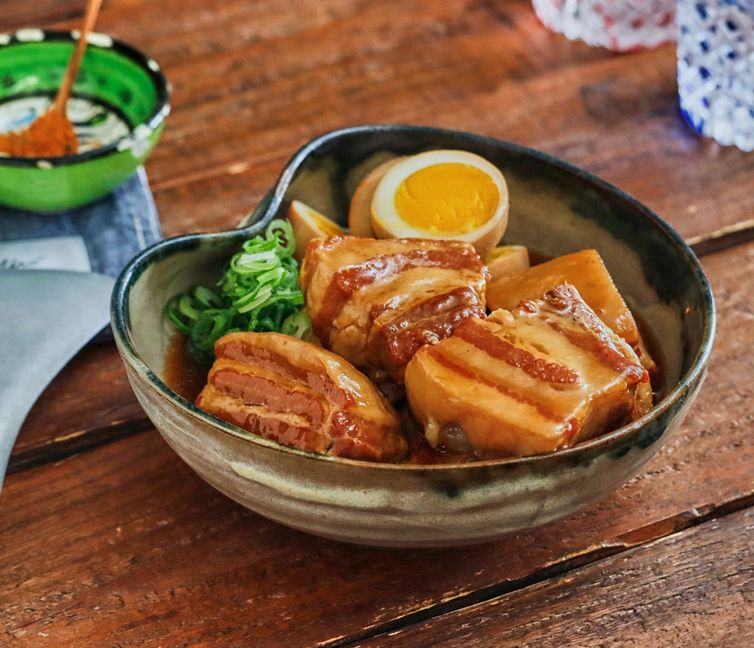
Kakuni, slow-braised pork belly, is a beloved traditional Japanese dish known for its incredibly tender texture and savory-sweet flavor. Its roots are deep, tracing back to an ancient Chinese dish called "Dongpo Rou." This Dongpo Rou found its way to Japan during the Edo period, arriving via Nagasaki, which was then a major gateway for international exchange. It was adapted to suit Japanese tastes, becoming what we know as "Kakuni." Various regions of Japan developed their own version of this braised pork; Okinawa has a similar local dish called "Rafute.” Interestingly, Kakuni isn't just limited to pork;there are also “Sea Kakuni” variations made with fish like tuna and bonito where cubed fish is simmered in the same sweet-savory sauce. When prepared well, even tuna – which can often be dry– turns out moist and tender. The popularity and appeal of Kakuni extends across Asia so much so that a famous piece of art called "Meat-Shaped Stone" (Rou Keishi), which remarkably resembles braised pork, is displayed in a museum in Taiwan. This sculpture’s realism is astounding, seemingly designed to evoke the "deliciousness" stored in the viewer's memory. More than just a home-cooked meal, Kakuni is truly a culinary art that has been nurtured through a long history and rich culture.

Yoshiro Takahashi
프로필
재료
2인분
원본 레시피(1배)는 2인분
레시피를 배수로 조정할 때 일부 재료의 비율은 약간 조정이 필요할 수 있습니다. 필요에 따라 조절하여 입맛에 맞게 완성하세요.
- 1.3 lb 삼겹살 덩어리
- 4 달걀
- 고명용 다진 파 (필요한 만큼)
- A2 cup 물
- A1/2 cup 간장
- A1/2 cup 요리용 사케
- A1/2 cup 일본 단 쌀술 (미린)
- A1/4 cup 설탕
- A8 신선한 생강 뿌리 둥근 슬라이스
- A2 마늘 쪽 (으깬)
- A1 대파 (초록색 윗부분)
만드는 법
- 1
삼겹살을 약 5cm 크기의 덩어리로 자릅니다. 달군 프라이팬(기름 불필요)에 삼겹살을 껍질 면이 아래로 가도록 놓고 모든 면을 갈색이 되도록 굽습니다.
삼겹살을 프라이팬에서 꺼내 큰 냄비에 넣습니다. 냄비에 물을 채우고 끓입니다. 뚜껑을 덮고 약불로 줄여 1시간 동안 끓인 후 물을 버립니다.
끓이는 동안 물이 많이 증발하면 냄비가 가득 차도록 필요에 따라 물을 더 추가하세요.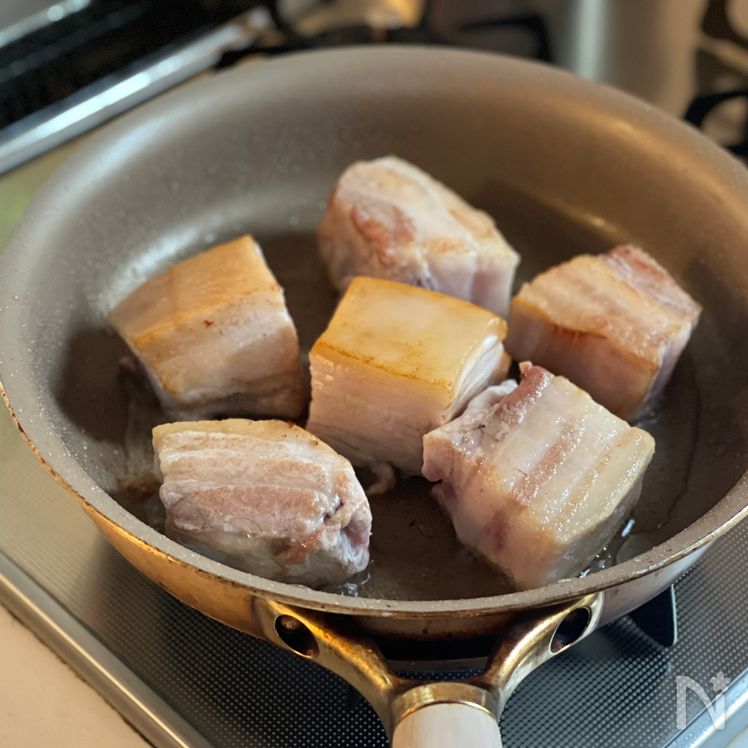
- 2
삼겹살이 끓는 동안 완숙 달걀을 준비합니다. 냄비에 달걀을 넣고 달걀의 대부분이 잠길 만큼 물을 부어 끓입니다. 끓기 시작하면 중약불로 줄이고 10분간 끓입니다.
달걀을 찬물에 담가 식히고 식으면 껍질을 벗깁니다.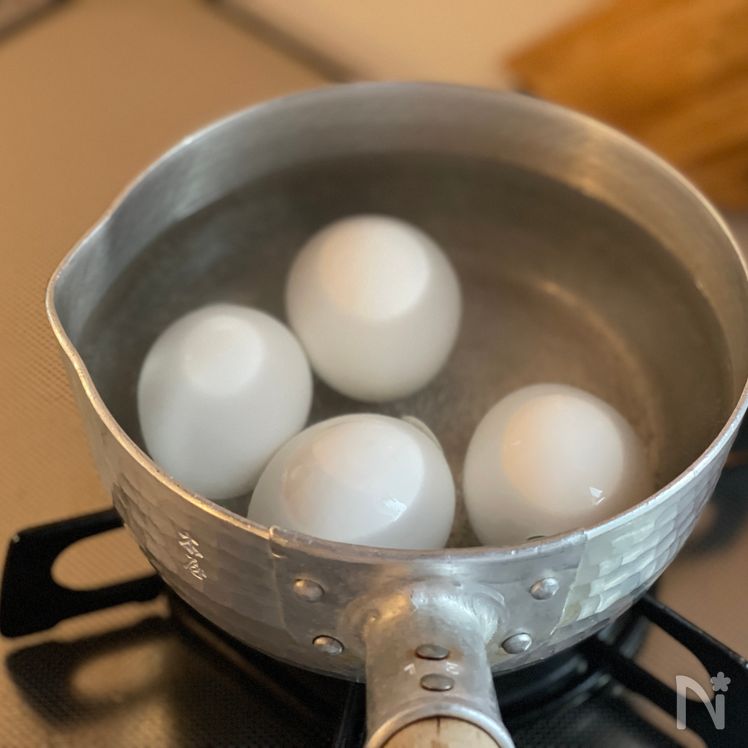
- 3
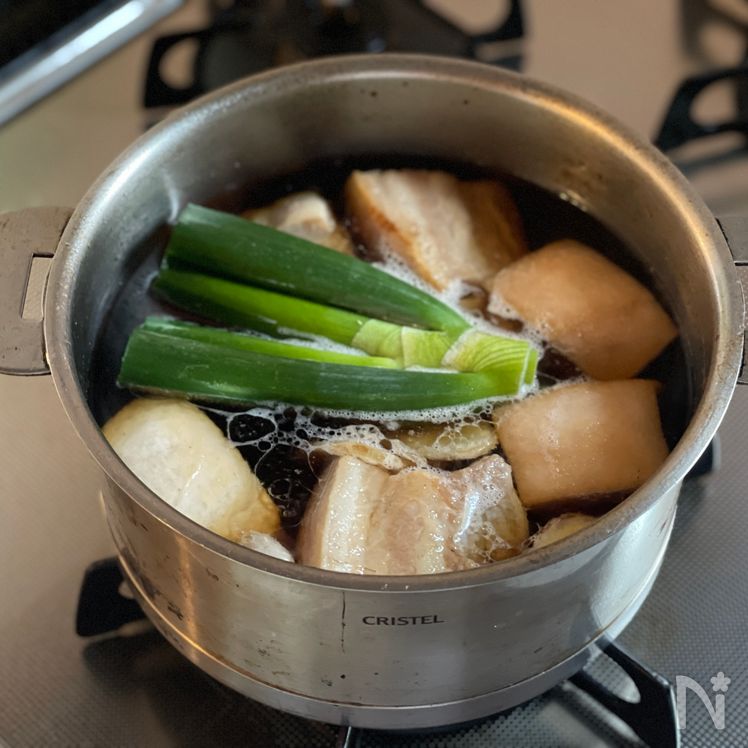
냄비(이제 삶은 삼겹살만 들어 있는)에 물 2컵, 간장, 요리용 사케, 일본 단 쌀술, 설탕, 생강 뿌리, 마늘 쪽, 대파를 삼겹살에 넣습니다. 끓입니다.
- 4
재료 위에 오토시부타(낙개) 또는 종이 타월을 올리고 냄비 위에 뚜껑을 덮습니다. (일본식 낙개는 보통 나무로 만든 뚜껑으로 조림 중에 재료 위에 직접 올려놓습니다;
낙개가 없다면 종이 타월을 냄비 크기에 맞게 잘라 재료 위에 직접 올려놓으면 됩니다.) 약불에서 1시간 동안 끓인 후 껍질을 벗긴 완숙 달걀을 넣습니다.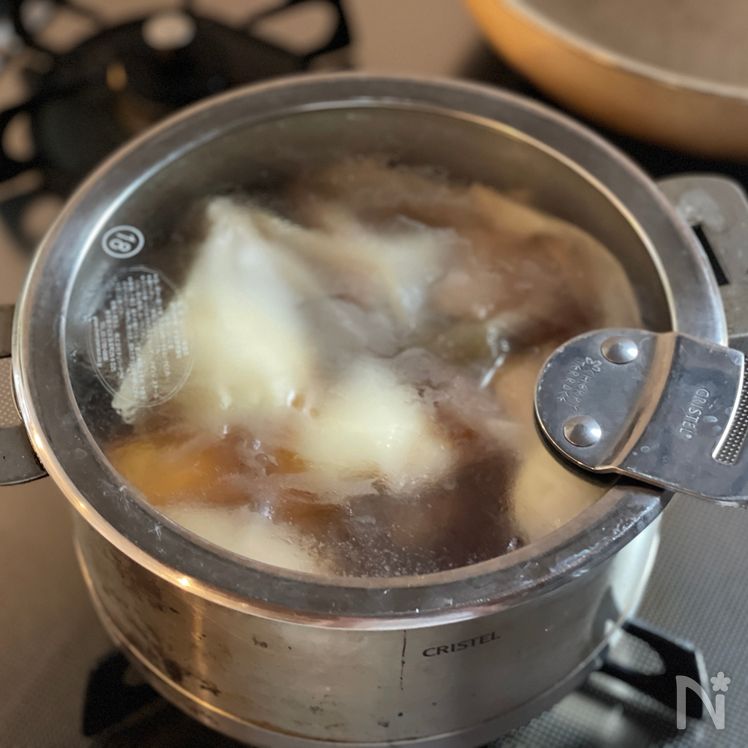
- 5
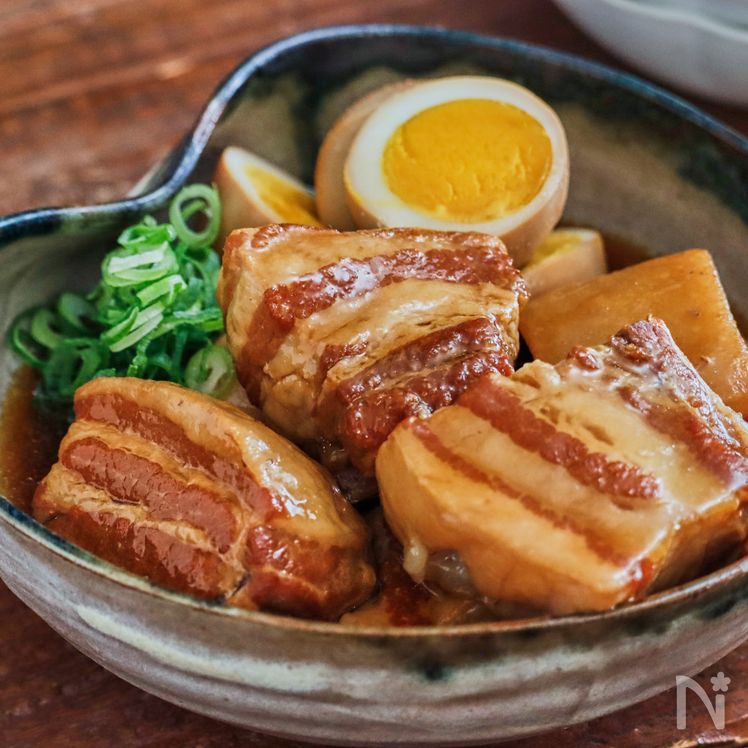
추가로 15-30분 더 끓입니다. 삼겹살과 달걀을 접시에 담고 다진 파로 고명을 올립니다.
레시피 ID
48
팁 & 노트
・삼겹살을 끓이는 동안 주의 깊게 살펴보고 원하는 부드러움을 얻기 위해 조리 시간을 조절하세요.
・삼겹살을 먼저 구워 갈색으로 만들면 감칠맛이 봉인되어 끓이는 동안 풍미가 빠져나가지 않습니다.
・요리가 거의 완성되기 몇 분 전에 색깔이 다양한 채소를 냄비에 넣고 돼지고기와 함께 끓일 수도 있습니다. 함께 담아내면 색감이 더해져 더욱 보기 좋은 요리가 됩니다!
・일본에서는 마지막 조림에서 남은 육수에 감자 전분이나 옥수수 전분을 넣어 만든 소스를 삼겹살에 곁들여 내기도 합니다.
내 평점
리뷰를 남기려면 무료 회원가입 또는 로그인이 필요합니다!
시작하기리뷰
첫 번째로 리뷰를 남겨보세요!
Born in 1988 in Kawasaki, Kanagawa Prefecture, I was inspired by my father, a traditional Japanese chef, and learned cooking fundamentals early at my family’s restaurant. After graduating from Senshu University’s Faculty of Law, I worked in sales at Nippon Shokken Co., Ltd., then as a restaurant manager, before completing a professional food coordinator program and starting my career as an independent culinary expert. I hold nine food-related qualifications, including Professional Chef’s License, Sake Sommelier (Kikisake-shi), Certified Sommelier (ANSA), and Vegetable Sommelier, and was the youngest to earn the advanced title of Certified Lecturer in Sake Studies. While rooted in Japanese cuisine that highlights natural flavors, my repertoire spans ethnic, Italian, and organic dishes. In 2015, I joined a project by Japan’s Ministry of Agriculture, Forestry and Fisheries and JICA, promoting Japanese cuisine domestically and in countries such as France, Paraguay, Bangladesh, and Serbia. A passionate triathlete, I have achieved top finishes in domestic competitions, won my age group at the 2018 Tomonoura Triathlon, and represented Japan at the Age Group World Championships in Australia (2018) and Switzerland (2019). Known as “the running chef,” I collaborate with sports brands and health media, advocating the integration of food, health, and sports. Since 2020, I have served as Official Athlete Food Coach for the Japan Para Table Tennis National Team, supporting athletes’ nutrition. In 2022, I became a father and now balance parenthood with my culinary and athletic careers.